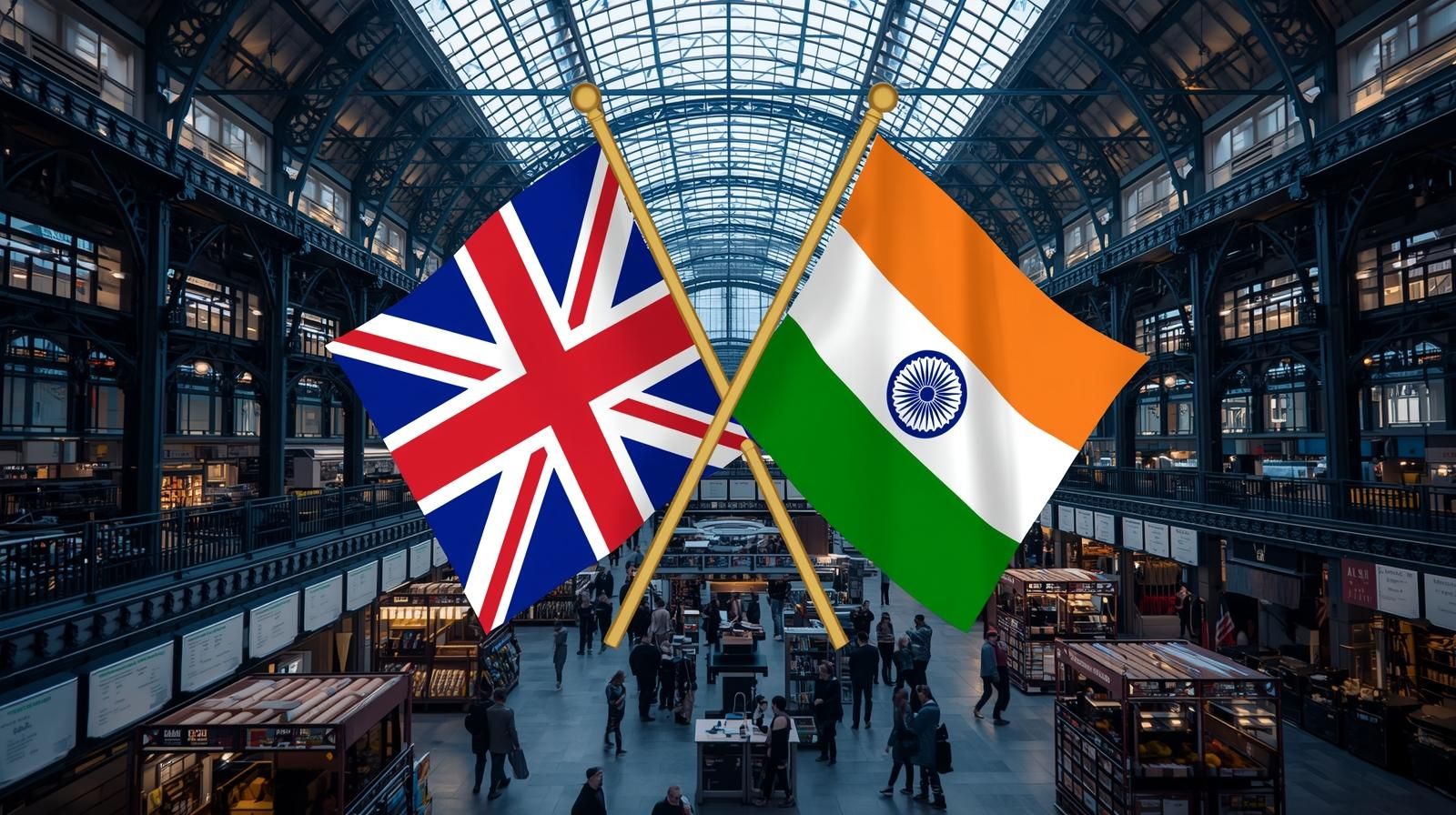
The recently signed UK-India Comprehensive Economic and Trade Agreement (CETA) is being hailed as a milestone in the economic partnership between the two nations. According to Reuters, the deal allows nearly 99 % of Indian exports to the UK to enter duty-free, while India will gradually remove tariffs on 90 % of British goods.
Prime Minister Narendra Modi noted that India’s bilateral trade with the UK currently stands at about USD 56 billion, with a target to reach USD 120 billion by 2030, as reported by Mint. Over the past three months since the trade pact was signed, the two countries have already seen a boost in deals worth around £6 billion.
Who stands to gain – and who could lose?
Indian textile and apparel exporters are among the biggest winners. Their products, which earlier faced tariffs of 8-12 %, now enjoy free access to UK markets. The engineering, automotive and electronics industries are also expected to see higher demand as tariffs ease.
For smaller firms, the pact simplifies procedures and provides more predictable trade rules, making it easier for SMEs to tap into new markets. Meanwhile, India’s IT and service firms may gain from smoother digital trade and mobility provisions.
However, not every sector benefits equally. The Indian Express explained that industries like gems and jewellery-already subject to low duties-may not see major change. Competition from China and Vietnam also means Indian exporters will need to focus on quality and compliance to sustain growth.
The numbers behind the deal
According to UK government estimates, bilateral trade could grow by £25.5 billion per year by 2040. The UK expects its own exports to India to increase by nearly 60 % over the next decade. The same report notes that 64 Indian companies have already pledged £1.3 billion in new UK investments, expected to create around 10,600 jobs.
Outlook: A gamechanger in progress
The UK-India trade pact offers a powerful platform for Indian exporters to expand globally. Yet experts say the real transformation will depend on how efficiently exporters adapt to UK standards, logistics costs, and compliance requirements.
In simple terms, the deal opens the door – but India’s exporters must walk through it. With steady implementation and competitive pricing, the CETA could truly become the gamechanger India’s export sector has been waiting for.